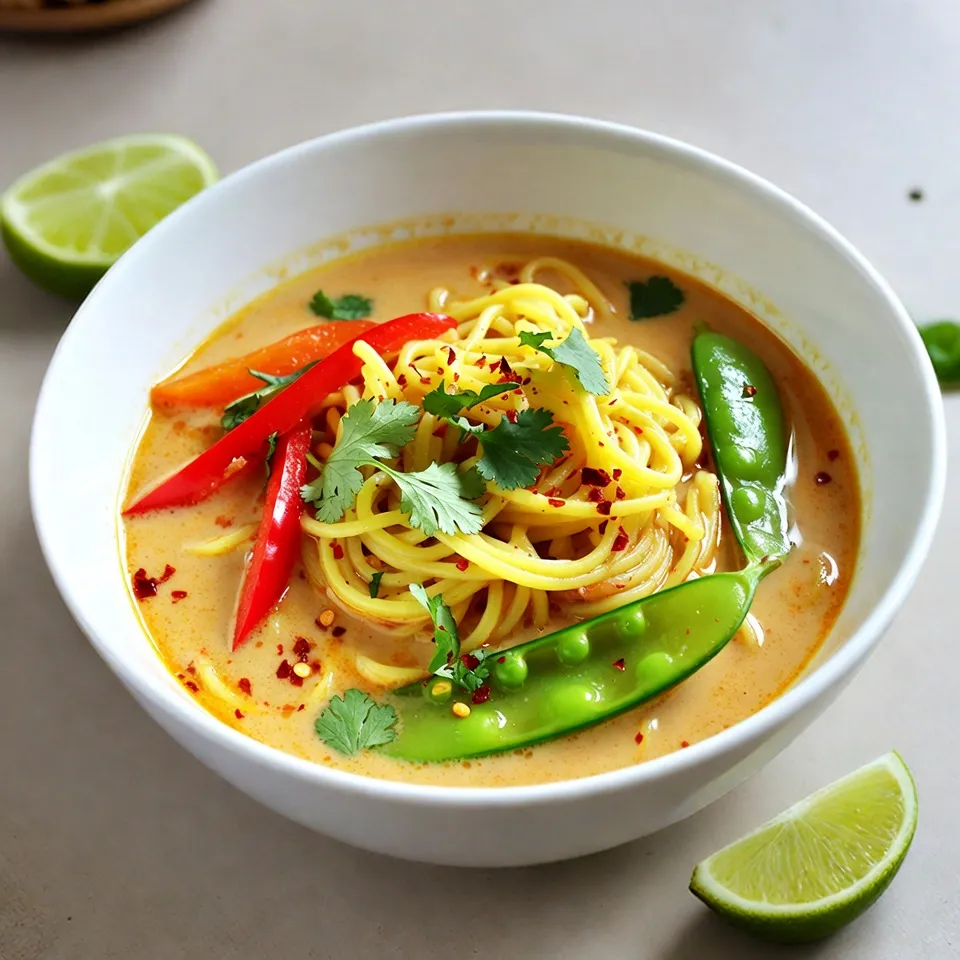
Craving a delicious and simple meal? Coconut Curry Ramen is the answer! This dish is packed with flavor and is easy to make at home. I’ll guide you through all the steps and show you how to customize it just the way you like. Whether you want it spicy, vegan, or loaded with toppings, you’ll find tips here. Let’s turn your kitchen into a flavor-packed haven!
Why I Love This Recipe
- Quick and Easy: This recipe can be prepared in just 25 minutes, making it perfect for busy weeknights or a last-minute meal.
- Flavor Packed: The combination of coconut milk and red curry paste creates a rich and creamy broth that is bursting with flavor.
- Customizable: You can easily adjust the ingredients to your liking by adding different vegetables or proteins, making it versatile for any palate.
- Healthy and Nourishing: Packed with vegetables and made with wholesome ingredients, this ramen is both nutritious and satisfying.
Ingredients
List of Essential Ingredients
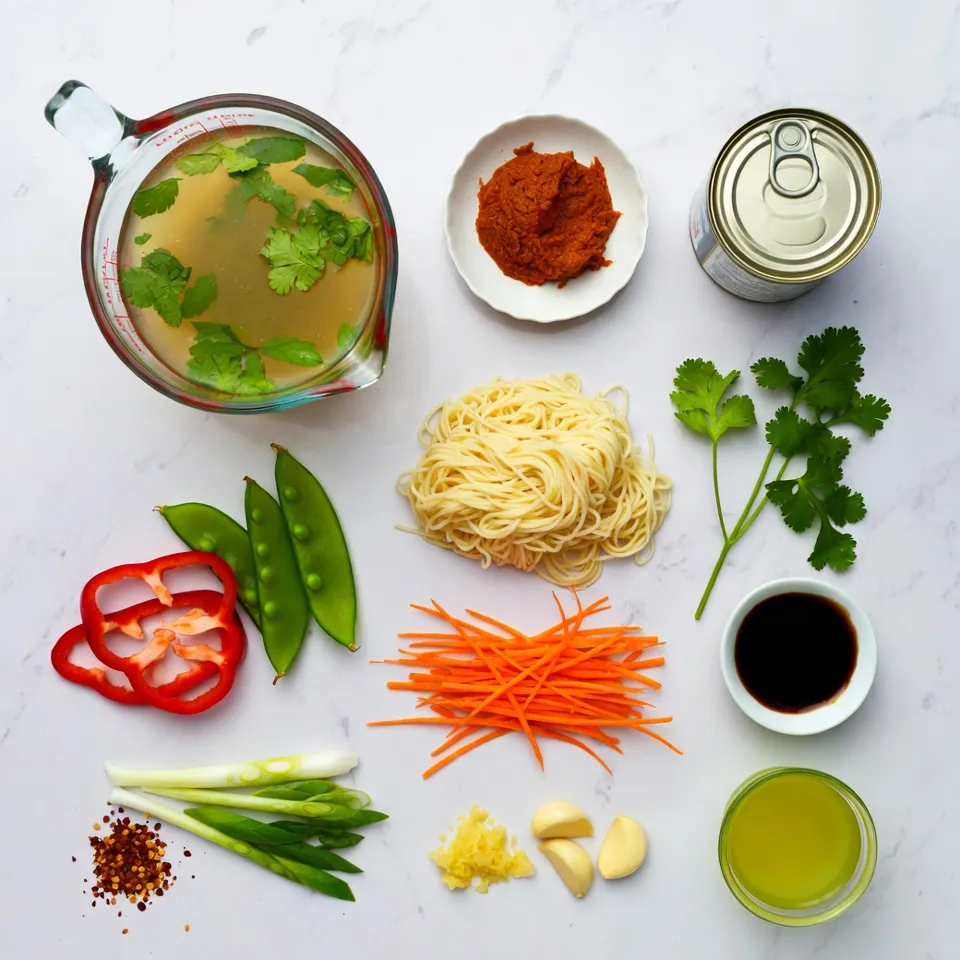
To make coconut curry ramen, gather these key ingredients:
– 2 cups vegetable broth
– 1 can (400ml) full-fat coconut milk
– 2 tablespoons red curry paste
– 200g ramen noodles (fresh or dried)
– 1 cup snap peas, trimmed
– 1 red bell pepper, thinly sliced into strips
– 1 medium carrot, julienned
– 3 green onions, sliced diagonally
– 2 tablespoons soy sauce
– 1 tablespoon fresh ginger, finely minced
– 2 cloves garlic, finely minced
– 1 tablespoon lime juice, freshly squeezed
– Fresh cilantro leaves for garnish
– Chili flakes for heat (optional)
Substitutions and Alternatives
You can swap some ingredients to fit your taste or diet:
– Use chicken broth instead of vegetable broth for a richer flavor.
– Light coconut milk works if you prefer a lighter dish.
– For spice, use yellow or green curry paste.
– Replace ramen noodles with rice noodles for a gluten-free option.
– Add tofu, shrimp, or chicken for protein.
Measurement Tips and Proportions
When measuring ingredients, accuracy helps ensure the best taste:
– Use a liquid measuring cup for broth and coconut milk.
– A kitchen scale is great for measuring ramen noodles.
– For chopped vegetables, a heaping cup works well.
– If you like stronger flavors, adjust soy sauce, lime juice, and curry paste.
– Taste as you go; it’s the best way to find your perfect balance!
Step-by-Step Instructions
Preparing the Aromatics
Start by heating a drizzle of oil in a large pot. Coconut oil works great here. Add minced garlic and ginger. Sauté them for about one minute, until you smell their rich aroma. Next, add two tablespoons of red curry paste. Stir it for a minute. This step boosts the flavor.
Cooking the Broth
Now, slowly pour in two cups of vegetable broth. Then, add one can of full-fat coconut milk. Stir well to mix everything. Bring the pot to a gentle simmer. This creates a rich and creamy base for your ramen.
Incorporating Vegetables and Noodles
Add sliced red bell pepper, julienned carrot, and trimmed snap peas. Let these cook for about five minutes. You want them tender but still crisp. In a separate pot, boil water. Cook 200 grams of ramen noodles according to the package directions. Drain them and set aside when done.
Final Touches and Presentation Tips
Once the veggies are soft, add the drained ramen noodles to the broth. Stir in two tablespoons of soy sauce and one tablespoon of fresh lime juice. Let everything cook together for another two to three minutes. Taste the broth and adjust seasoning if needed.
To serve, ladle the ramen into deep bowls. Garnish with sliced green onions, fresh cilantro leaves, and chili flakes for heat if you like. For a nice touch, add a lime wedge on the side. This makes your dish look bright and inviting. Enjoy your meal!
Tips & Tricks
Cooking Tips for Perfect Ramen
To make great ramen, use fresh ingredients. Fresh ramen noodles cook faster and taste better. If you’re using dried noodles, follow the package instructions. They need just a few minutes in boiling water. Always drain them and set aside. This prevents mushy noodles later.
When cooking the broth, remember to sauté your garlic and ginger before adding other ingredients. This step wakes up their flavors and gives your broth a rich base. Stir the red curry paste well to mix it fully with the broth. Let it simmer gently to blend all tastes.
Flavor Enhancements and Adjustments
Want to boost flavor? Add more lime juice or soy sauce to taste. A splash of fish sauce can add depth too. For a spicy kick, mix in chili flakes when serving. If you like sweeter flavors, a dash of brown sugar can balance heat.
You can also try different veggies for variety. Bok choy or spinach adds a unique touch. Don’t forget to garnish! Fresh cilantro and green onions make a big difference in taste and look.
Common Mistakes to Avoid
One common mistake is overcooking the vegetables. Keep them crisp by adding them close to the end. They should stay bright and colorful.
Another error is cooking the noodles too long. Aim for al dente, as they will continue to soften in the broth. Lastly, always taste as you go. This helps you adjust flavors before serving your ramen.
Pro Tips
- Use Fresh Ingredients: Fresh vegetables not only enhance the flavor but also add vibrant color to your dish. Opt for seasonal produce whenever possible.
- Adjust Spice Levels: If you prefer a milder curry, start with less red curry paste and gradually add more to suit your taste. This way, you can control the heat level effectively.
- Perfectly Cooked Noodles: Ramen noodles can become mushy if overcooked. Make sure to cook them just until al dente, as they will continue to soften in the hot broth.
- Garnish Creatively: Besides cilantro and lime, consider adding toasted sesame seeds or sliced jalapeños for a unique twist and added texture to your ramen.
Variations
Protein Additions (Tofu, Chicken, Shrimp)
You can add protein to your Coconut Curry Ramen for more flavor and nutrition. Tofu is a great choice for a vegan dish. Use firm tofu, cut into cubes, and sauté it until golden. For chicken lovers, bite-sized pieces of chicken breast work well. Cook the chicken in the broth until it is no longer pink. If you prefer seafood, shrimp is a fast option. Just add shrimp to the broth a few minutes before serving. Cook until they turn pink and firm. Each protein adds its own taste and texture to the dish.
Vegan and Gluten-Free Options
To keep your Coconut Curry Ramen vegan, stick to vegetable broth and omit any animal products. Ensure your curry paste is vegan, as some brands may contain fish sauce. For a gluten-free meal, choose gluten-free ramen or rice noodles. Check the soy sauce label, as some may contain gluten. You can use tamari as a gluten-free alternative. These options make the dish accessible to everyone while keeping it delicious.
Flavoring Variations (Different Curry Pastes, Spices)
The flavor of your ramen can change based on the curry paste you use. Red curry paste gives a rich, spicy taste. Green curry paste offers a fresher, more herbal flavor. Yellow curry paste is milder and sweeter. You can also add spices like turmeric or cumin for extra depth. For a kick, sprinkle in some chili flakes or fresh chili peppers. Each variation leads to a unique taste experience. Feel free to experiment and find your favorite combination!
Storage Info
How to Store Leftovers
To store leftover coconut curry ramen, let it cool first. Transfer it to an airtight container. Make sure to keep the noodles and broth separate if possible. This helps the noodles stay firm. Store the container in the fridge for up to three days.
Reheating Instructions
When you want to eat the leftovers, reheat them on the stove. Pour the broth and veggies into a pot. Heat over medium until hot. If the noodles got soft, cook them separately. Add them to the hot broth right before serving.
Freezing Tips for Ramen
You can freeze coconut curry ramen too! First, let it cool completely. Use freezer-safe containers or bags. Store the broth and noodles separately. This way, they keep better. You can freeze it for up to two months. When you’re ready to eat, thaw it in the fridge overnight before reheating.
FAQs
What is Coconut Curry Ramen?
Coconut curry ramen is a warm noodle soup. It blends rich coconut milk with spicy red curry paste. You can add fresh veggies, like snap peas and bell peppers. This dish offers a creamy, savory, and slightly spicy flavor.
Can I make Coconut Curry Ramen ahead of time?
Yes, you can make this dish ahead of time. Cook the broth and veggies, then store them in the fridge. When ready to eat, simply reheat and add the noodles. This saves time and makes for a quick meal.
What can I serve with Coconut Curry Ramen?
You can serve coconut curry ramen with several sides. Fresh spring rolls pair well for a light touch. For a heartier meal, try some garlic bread or a simple salad. These sides complement the rich flavors of the ramen.
How spicy is Coconut Curry Ramen?
The spice level depends on the red curry paste you use. You can adjust the heat by adding chili flakes. If you prefer a milder dish, use less curry paste or skip the chili flakes.
Where can I find Coconut Curry Ramen in restaurants?
Many Asian restaurants serve coconut curry ramen. Look for places that specialize in Thai or fusion cuisine. Some trendy ramen shops also offer unique takes on this dish.
This blog post covered the key ingredients, steps, and tips for making coconut curry ramen. You learned about essential ingredients and how to substitute them. I shared tips for preparing the broth and assembling your dish. We explored variations to suit different diets and how to store your leftovers properly.
In making your coconut curry ramen, remember that practice makes perfect. Enjoy the process and make it your own! By following these steps, you will create a delicious bowl of ramen every tim